Electrical FAQs & safety advice
Straight answers on consumer units, EICRs, older wiring and common electrical problems for homes in Welwyn Garden City and across Hertfordshire.
Costs & general questions
How much does an electrician cost in Welwyn Garden City?
Our standard labour rate is £50 + VAT per hour, with a minimum first-hour charge of £70 + VAT for smaller jobs. For larger projects such as consumer unit replacements, rewiring and installations, we provide a fixed-price quotation after assessing the work.
How much does a house rewire cost?
It depends on the property's size, layout and construction, the number of electrical points, whether it's occupied, access to existing wiring, the number of new circuits and the extent of making-good. We give individual quotations rather than a single price for every home.
Can you rewire a house while we're living in it?
Yes, although it needs more planning and may take longer than an empty house. Supplies may be temporarily disconnected and furniture may need moving. We plan the work to minimise disruption and keep essential supplies on where possible, but some temporary loss of power should be expected.
Why does my RCD keep tripping?
An RCD disconnects the supply when it detects an imbalance between the current in the live and neutral conductors. Frequent tripping may be caused by faulty appliances, damaged wiring, moisture in equipment or insulation faults. Where several circuits share one RCD, a fault on one can cut power to others. Repeatedly resetting it without finding the cause isn't recommended. Our fault finding service can track it down.
Can I install an EV charger with my existing fuse box?
In many cases, yes. It depends on the condition of the installation, available supply capacity and existing protection. An electrician should assess the supply, earthing and existing demand first. Some installations need a dedicated circuit, additional protection or alterations, but a full consumer unit replacement isn't automatically necessary.
Do you carry out commercial electrical work?
Yes: EICRs, distribution board installations and upgrades, additional sockets and lighting, emergency lighting, fault finding, three-phase installations, and alterations and refurbishments for businesses, landlords and property managers across Hertfordshire.
What areas does Huenique Electrical cover?
We're based in Welwyn and regularly work in Welwyn Garden City, Welwyn, Tewin, Burnham Green, Bramfield, Digswell, Datchworth, Knebworth, Woolmer Green, Codicote, Hertford, Stevenage and Hatfield, as well as St Albans and other surrounding Hertfordshire areas depending on the job. Get in touch to confirm availability in your area.
Consumer units & fuse boxes
How have consumer units changed over the years?
1950s–60s: rewirable fuses in wooden, metal or early insulated enclosures, with overcurrent protection but generally no RCD shock protection.
1970s–80s: miniature circuit breakers (MCBs) became common and could be reset after a fault. Many installations from this era still have limited or no RCD protection.
1990s–2000s: RCD protection became more widespread, and the 17th Edition (2008) significantly expanded RCD requirements. RCBOs, combining both protections in one device, became practical.
2010s: from January 2016, domestic consumer units generally had to have non-combustible (typically metal) enclosures.
2020s: modern units can include RCBOs per circuit, surge protection devices (SPDs), arc fault detection devices (AFDDs) where required or recommended by BS 7671, and capacity for EV chargers, heat pumps and solar PV.
Does an old consumer unit need replacing?
Not simply because it doesn't meet the latest edition of BS 7671. Existing installations generally don't need upgrading just because newer standards exist. Replacement may be recommended where the unit is damaged, deteriorated or unsafe, protective devices are defective or unsuitable, required protection can't reasonably be added, there's not enough capacity for alterations, or an inspection identifies defects. A qualified electrician should assess it first.
What are the benefits of upgrading a consumer unit?
Improved protection against shock, overloads and certain faults; individual circuit protection with RCBOs so one fault doesn't switch everything off; surge protection for sensitive equipment; space for future circuits like EV charging; and easier maintenance and fault identification.
How do I know whether my consumer unit needs upgrading?
Consider an inspection if your unit shows signs of overheating or damage, devices trip frequently, you have an older fuse box without RCD protection, you're planning significant alterations, or it hasn't been inspected for many years. Frequent tripping doesn't necessarily mean the unit itself is faulty, so the cause should be investigated first.
How long does a consumer unit replacement take?
A typical domestic replacement can often be completed within one working day, depending on the installation. Power will be off during parts of the work, and extra time may be needed if wiring defects or inadequate earthing are found.
More about our consumer unit upgrades →
EICRs & electrical inspections
What is an EICR?
An Electrical Installation Condition Report is a detailed inspection and test of an existing installation. It covers consumer units, circuits and fixed wiring, sockets and lighting, earthing and bonding, RCDs, protective devices and visible signs of damage. It states whether the installation is satisfactory or unsatisfactory. It's a condition report, not a guarantee of safety.
How often should an EICR be carried out?
Privately rented homes in England: at intervals of no more than five years, or sooner if the previous report requires. Owner-occupied homes: around every ten years is generally recommended, and when buying a property. Commercial: depends on the premises, its use, conditions and previous findings.
Who can carry out an EICR?
Someone competent in electrical inspection and testing, with the technical knowledge, practical experience and understanding of BS 7671 to identify defects and interpret results. An electrician doesn't have to be registered with NICEIC or NAPIT to carry out an EICR, but must be suitably qualified and competent.
What happens during an EICR?
A combination of visual inspection and testing: checking the consumer unit and connections; earthing and bonding; circuit tests such as continuity, insulation resistance, polarity and earth fault loop impedance; RCD operation; a representative sample of accessories; and recording any defects. It isn't necessarily a complete examination of every concealed cable, and any limitations are recorded.
What do EICR codes mean?
C1, danger present: immediate action required. C2, potentially dangerous: urgent remedial action required. C3, improvement recommended: doesn't by itself make the report unsatisfactory. FI, further investigation: required without delay. A report with any C1, C2 or FI is unsatisfactory, though that doesn't automatically mean the whole installation needs replacing.
What are a landlord's EICR responsibilities in England?
Generally: have the installation inspected at least every five years (or sooner if specified); give existing tenants a copy within 28 days; give new tenants a copy before they move in; give prospective tenants a copy within 28 days of a written request; give the local authority a copy within seven days of a request; complete any C1, C2 or FI remedial work within 28 days (or sooner if specified); and provide written confirmation once done. Penalties of up to £30,000 can apply, subject to the scope and exemptions of the regulations.
Does an old consumer unit automatically fail an EICR?
No. Whether an older unit results in an observation depends on the actual safety implications. The absence of an RCD doesn't automatically justify a C2 in every situation, and an older plastic consumer unit doesn't automatically need replacing just because modern units use non-combustible enclosures.
Do I need an EICR when buying a house?
It isn't generally a legal requirement for owner-occupied homes in England, but it's strongly recommended, especially for older properties. It can reveal wiring, consumer unit, earthing and protection issues so you understand potential repair or rewiring costs before you buy.
How much does an EICR cost in Welwyn Garden City?
Domestic EICRs start from £160 + VAT for installations with up to six circuits. Larger installations and additional distribution boards may cost more. We'll quote based on your property.
Older wiring: VIR rubber cable & green goo
What is VIR (old rubber) wiring?
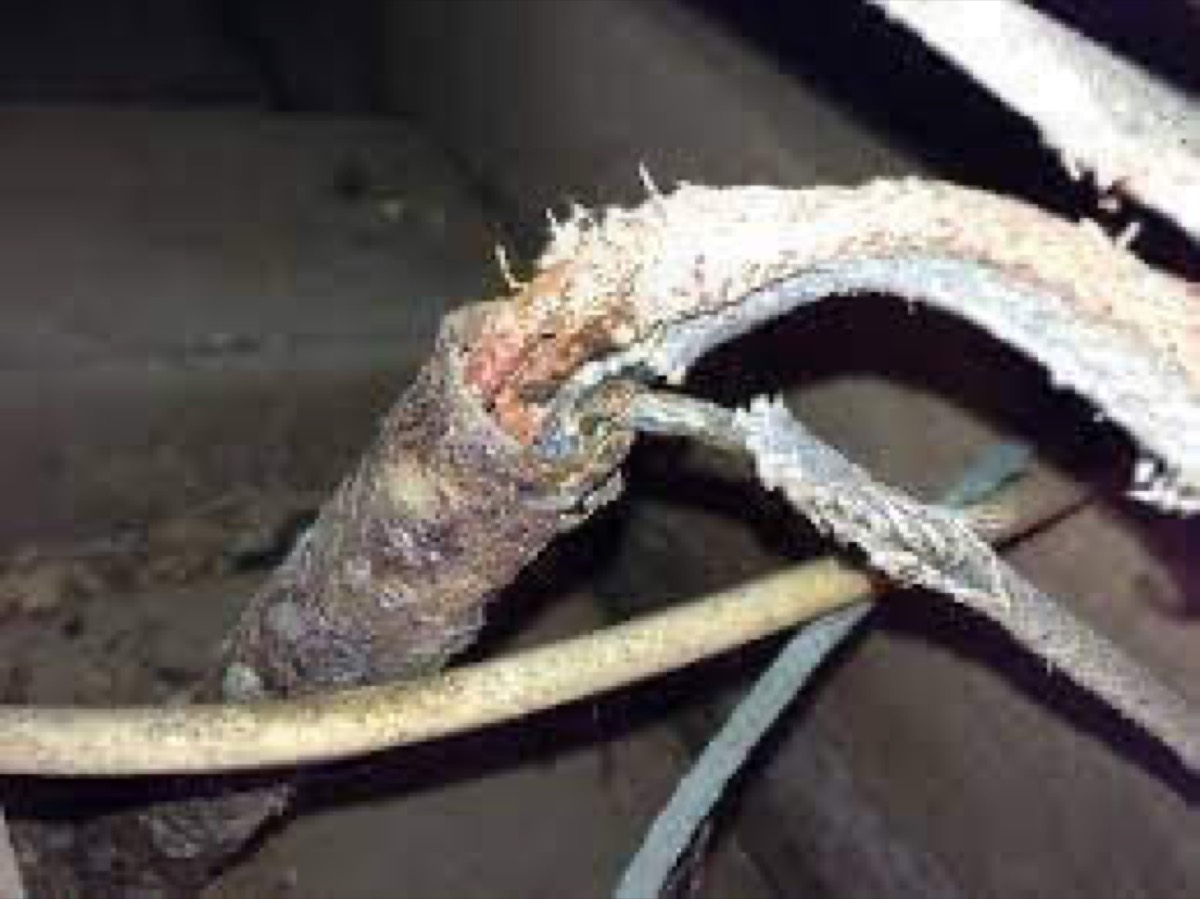
Vulcanised Indian Rubber (VIR) cable is an early wiring type found in older UK properties, mostly wired before PVC cables became widespread in the 1950s–60s. The rubber insulation deteriorates over time and can now present significant safety concerns. Older systems didn't always include a separate earth conductor, sometimes relying on metal conduit as the earth path.
Why is VIR wiring potentially dangerous?
Over decades the rubber becomes brittle and prone to cracking. That can expose live conductors, causing shock risk, short circuits and fire risk. It often looks intact until disturbed: removing a socket or replacing a switch can make the insulation crumble. Earthing may also be inadequate or missing.
Can an electrician add sockets or lights to VIR wiring?
At Huenique Electrical, we don't carry out additions or alterations to existing VIR wiring. Disturbing it can crack the insulation and expose live copper, and even satisfactory test results don't guarantee the ageing rubber will survive being moved. Where alterations are needed, we'll recommend replacement wiring or new circuits.
Does VIR wiring need replacing, and how can I tell if I have it?
Its condition must be assessed, but where insulation is cracked, brittle or crumbling, replacement is generally necessary, and we'll usually recommend rewiring affected circuits. Signs include black rubber-insulated conductors at accessories, brittle insulation, old wiring in metal conduit and rewirable fuse boxes. An old fuse box doesn't prove VIR is present, and new sockets don't prove it's gone. Only an inspection can tell. Don't remove accessories yourself.
What is green goo ("cable cancer")?
A sticky green or greenish-brown substance that can appear around cables, sockets, switches and consumer units, mostly associated with some PVC cables installed in the 1960s–70s. Plasticisers migrate out of the insulation and react with copper. It isn't biological and doesn't spread between cables, but it does indicate deterioration of the original insulation.
Is green goo dangerous, and what should I do?
It doesn't automatically mean a circuit is unsafe, but it shouldn't be ignored. It can contaminate terminals and accessories and affect connections. Avoid touching it, don't remove accessories or try to clean terminals, and arrange an inspection. If anything is overheating or smoking, stop using it and get urgent help. Depending on the extent, remedial work may be possible, or replacing affected circuits may be the best long-term fix. We won't extend circuits where contamination makes the wiring unsuitable.
Need a local electrician? Get in touch today
Whether it's a small repair, an EICR, a consumer unit upgrade or a complete installation, tell us a little about the job and Lewis will get back to you to discuss it and arrange a visit if needed.
- Call07769 329338
- Email[email protected]
- Based inWelwyn, Hertfordshire